How Does Pregnancy Influence Dental Health?
Pregnancy brings anticipation and joy as you prepare to welcome your baby, but it also triggers physical changes that can affect your oral health. Hormonal shifts, new eating habits and even morning sickness can all impact your teeth and gums. Fortunately, with care from Distinctive Dental Solutions, you can maintain a healthy smile and protect your overall well-being during pregnancy.
Pregnancy can have profound impacts on your oral health:
- Increased hormone levels can raise your risk for gum inflammation and disease
- Changes in diet and eating patterns may contribute to tooth decay
- Morning sickness can expose teeth to harmful stomach acid
- Shifting priorities may lead to less frequent brushing and flossing
- Certain pregnancy-related conditions can cause temporary changes to your gums and teeth
Recognizing these changes is your first step. Here’s what you need to know to care for your teeth and gums before, during and after pregnancy.
Why Does Pregnancy Increase My Risk for Dental Problems?
Pregnancy’s hormone surges, which mainly involve progesterone and estrogen, affect your gums and make them more sensitive to plaque, leading to inflammation even with small amounts of buildup. You might find your eating habits changing, from more frequent snacking to cravings for sweets or even non-food items. These shifts can lead to more plaque and cavities.
Morning sickness plays a role too: stomach acid wears away enamel and can make brushing harder, especially if it triggers nausea. Less frequent brushing means a greater risk for dental issues at a time when your teeth need extra attention.
What Dental Issues Should I Watch Out For During Pregnancy?
Gingivitis is especially common, affecting up to 75% of expectant mothers. It can cause swollen, bleeding gums and, if untreated, progress to more serious gum infections.
Tooth decay and cavities become more likely due to diet and reduced oral care, and the bacteria causing cavities can be passed to your child, impacting their dental health later.
Pregnancy tumors are non-cancerous bumps that can develop on your gums. While usually harmless and disappearing after birth, these may need removal if they become bothersome.
Enamel erosion from morning sickness exposes teeth to acid, increasing sensitivity and decay risk.
Some may notice loose teeth from temporary changes in the tissues holding them. This usually resolves after delivery but should be discussed with your dentist.
Be alert for bad breath, mouth sores, gum recession or persistent toothaches. These could indicate an infection requiring prompt care.
Can Gum Disease Really Affect My Baby?
There is a proven link between gum disease and preterm birth. Untreated infection can enter your bloodstream and increase inflammation, potentially leading to early labor. Preterm babies face higher health risks, so maintaining your oral health isn’t just about your smile: it’s crucial for your baby, too. Regular dental care and good hygiene are essential for prevention.
What Dental Care Is Safe During Pregnancy?
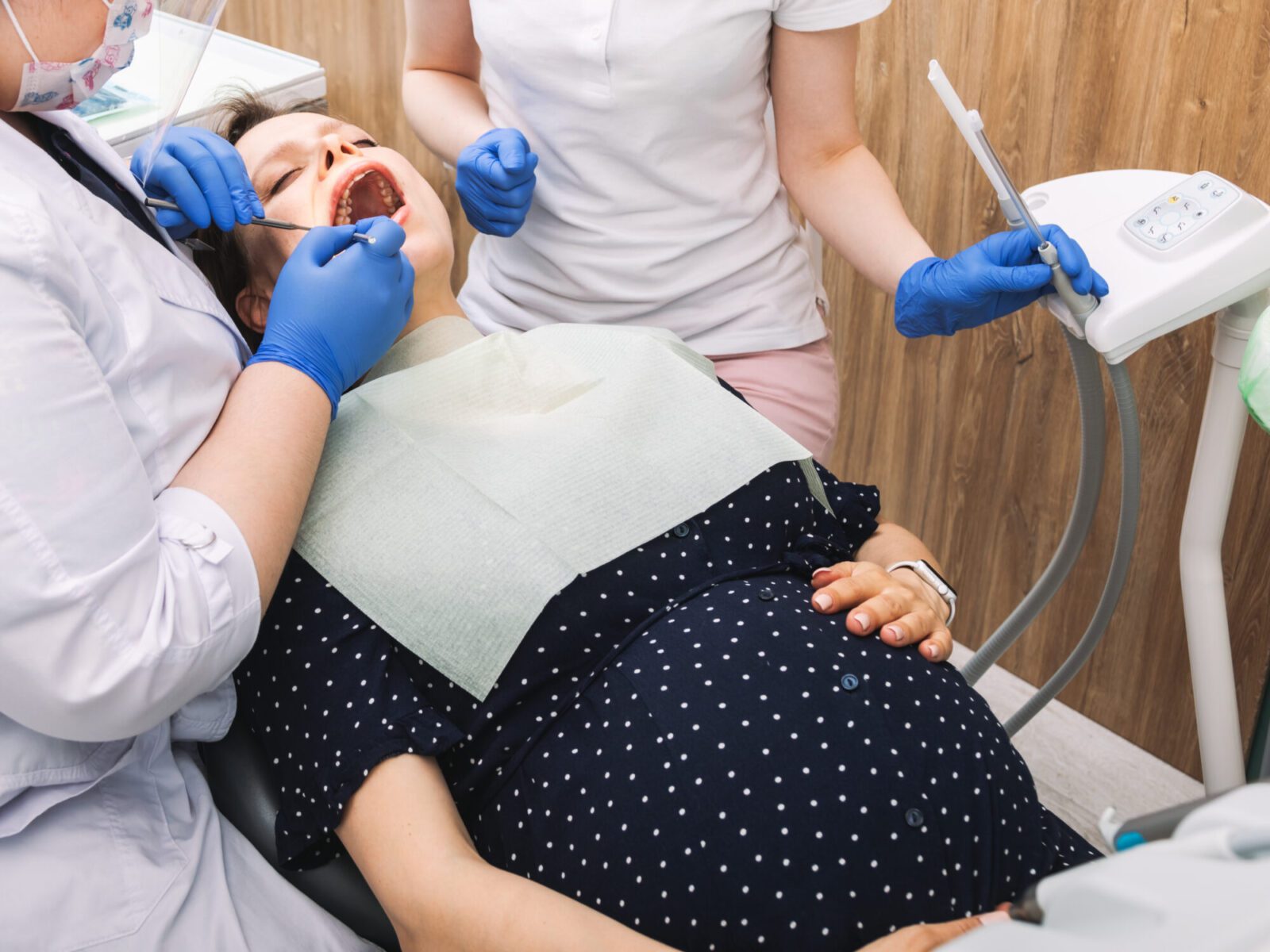
It’s safe and important to continue regular dental visits during pregnancy. Let your dentist know you’re expecting so proper precautions are taken, especially during X-rays (which are safe with shielding).
- Regular checkups help catch problems early. At Distinctive Dental Solutions, we develop a care plan that puts your needs and baby first.
- Dental X-rays are safe during pregnancy when shielding is used. Always inform us of your pregnancy for tailored care.
- Necessary treatments, such as fillings, can be done safely, but we recommend mercury-free composites over amalgam fillings. There’s no need to remove existing amalgam fillings unless there’s an issue.
- Pain management and antibiotics can be prescribed safely; local anesthesia is also considered safe.
While elective procedures can usually wait until after birth, don’t delay urgent care. Untreated dental problems can be riskier than treatment.
How Can I Maintain Good Oral Hygiene Throughout Pregnancy?
Caring for your smile is straightforward with these steps:
- Brush twice daily with fluoride toothpaste on a soft brush. If you struggle with nausea, try bland toothpaste or different brushing times.
- Floss once daily to clear plaque from between teeth.
- Rinse after morning sickness using a teaspoon of baking soda in a cup of water to counteract acid, and wait 30 minutes before brushing.
- Eat nutritious foods for your and your baby’s health, including nutrients like calcium, protein, and vitamins A, C and D. Choose whole foods over sugary snacks and drinks.
- Stay hydrated by drinking water regularly; it helps rinse away food debris and bacteria.
- Avoid tobacco during pregnancy. Smoking heightens your risk for gum disease and complications; ask us for help quitting.
Protect Your Smile and Your Baby’s Health
Oral health is always important, but pregnancy makes it critical. The physical changes of pregnancy can raise your risk of dental issues, but with attentive at-home care and regular checkups, you can protect yourself and your baby.
Distinctive Dental Solutions is here to guide you with education, customized treatment plans and compassionate care. We recognize the unique needs of expectant mothers and are committed to helping you maintain a healthy smile. Contact us to schedule your checkup.